The Arrábida Natural Park occupies a limestone ridge south of Lisbon along the Setúbal Peninsula, dropping to a coastline of extraordinary clarity, water of a translucence more commonly associated with the Greek islands, backed by cliffs of white and ochre limestone draped in Mediterranean scrub. It is one of the best-kept secrets in proximity to a major European capital: forty-five minutes from central Lisbon by private car, and entirely unknown to most international visitors who spend their Portugal time in the city, Sintra, and the Algarve. FFGR Portugal provides private chauffeur tours to Arrábida and the Setúbal region as full-day excursions from Lisbon, combining the coastal landscapes with the wine estates of the peninsula and the historic hilltop town of Palmela.
Arrábida Natural Park | The Coastline
The road through Arrábida Natural Park follows the ridge above the sea, with a succession of viewpoints over coves that are visible from the corniche as turquoise interruptions in the white cliff face. The coves, Portinho da Arrábida, Galapinhos, Galapos, Coelhos, are accessible by a combination of footpath and a limited road system that restricts vehicle numbers during summer months. FFGR Portugal navigates the access restrictions and positions the vehicle at the most accessible point for each cove, allowing clients to descend to the beach without the vehicle being a logistical constraint.
The water clarity at Arrábida is a consequence of the limestone geology and the absence of river input on this section of coast: the same limestone that creates the cliffs filters the groundwater and keeps the bay bottom visible through eight metres of depth on calm days. For clients who wish to enter the water, FFGR Portugal can coordinate a private boat excursion from Setúbal marina that accesses the coves from the sea, providing views of the cliffs and the convent that are not available from the land-based route.
Convento da Arrábida | The Friars' Fortress
The Convento da Arrábida clings to the cliff face above Portinho at a point that looks more like a fortification than a place of contemplation: a sequence of white buildings terraced into the limestone, occupied by Franciscan friars from 1542 until the dissolution of the monasteries in 1834. The convent is now privately owned by the Fundação José Berardo and used as a venue for private events, and the exterior is accessible as part of the park road. FFGR Portugal incorporates a stop at the convent viewpoint in the Arrábida itinerary, where the combination of white buildings, blue sea, and limestone cliffs is among the most photographed scenes in Portugal.
The convent's position on the cliff makes it one of the few points on the Arrábida coast where the relationship between the ridge, the scrub, and the sea is visible as a single composition. The light here in the late morning: when the sun has cleared the eastern ridge but not yet reached the angle that bleaches the limestone: is particularly fine, and FFGR Portugal times the arrival at the convent to take advantage of it when the day permits.
Setúbal | Port, Fish Market, and Estuary
Setúbal is a working port city of genuine character: a place where the sardine-processing industry built the nineteenth-century prosperity that funded the azulejo-fronted civic buildings still lining the waterfront. The Mercado do Livramento is one of the finest covered markets in Portugal, with a fish counter that reflects the extraordinary variety of the Setúbal Estuary and the Atlantic waters of the peninsula. A morning at the market, buying smoked swordfish, dried salt cod in several grades, and regional cheeses, is among the most direct experiences of Portuguese provisioning culture available within range of Lisbon.
The Setúbal Estuary itself is a protected area of the Sado Estuary Natural Reserve, and home to a resident population of bottlenose dolphins that number in the dozens and are reliably encountered on boat excursions from the Setúbal waterfront. FFGR Portugal coordinates the boat excursion booking as part of the Setúbal programme, timing the embarkation to allow the fish market visit in the morning and the dolphin excursion in the early afternoon before returning to Arrábida for the late-afternoon cove.
Palmela | Castle and Wine
Palmela sits on a ridge above the Setúbal Peninsula with a Moorish castle restored in the fifteenth century by the Order of Santiago, converted into a pousada in the interior of the keep, and affording views from the battlements that extend to the Tagus on clear days. The town below the castle is the centre of the Setúbal wine appellation, producing wines from the Castelão grape variety in a style markedly different from the Douro or Alentejo: lighter-bodied, with a freshness that reflects the Atlantic influence on the peninsula.
The Setúbal Moscatel: the fortified wine produced from Muscat of Alexandria grapes on the clay soils of the peninsula: is one of Portugal's most distinctive regional productions. The largest producer, José Maria da Fonseca, maintains a winery and visitor centre in Azeitão that offers the only comprehensive tasting of aged Moscatel vintages available to private visitors, with examples dating to the mid-twentieth century available in the cellar tour. FFGR Portugal includes the Fonseca winery visit as an optional element of the Palmela and Setúbal programme.
Comporta | Luxury Coast Extension
Comporta lies across the Sado Estuary from Setúbal: a thirty-minute ferry crossing or a fifty-minute road journey, and has emerged over the past decade as the most fashionable coastal destination in Portugal for UHNW visitors. The Comporta coast is a succession of dune-backed beaches of Atlantic scale, quiet in character and largely undeveloped compared to the Algarve, with a village of white houses and rice paddies that has attracted a discreet residential community of international figures.
FFGR Portugal connects Arrábida and Setúbal to Comporta as a natural circuit: the morning spent in the natural park and the port town, the afternoon at Comporta for a long lunch at one of the beach restaurants and an hour on the dunes before the return to Lisbon. The full circuit takes nine to ten hours and covers the best of the Atlantic coast within the Lisbon day-trip range without any element feeling rushed.
Full-Day Programme | Lisbon to Arrábida, Setúbal and Return
A full-day Arrábida and Setúbal programme from Lisbon departs at nine for arrival at Palmela by ten. The castle and the Fonseca winery (if included) occupy the morning, with the vehicle descending to Setúbal for lunch at a waterfront restaurant by twelve-thirty. The post-lunch programme covers the market district and the estuary waterfront before ascending to the park road above Arrábida by three, with the late-afternoon light over the coves the final experience of the day before the return to Lisbon by six.
For clients staying on the Estoril Coast or in Cascais rather than Lisbon, Arrábida and Setúbal are an even more natural excursion: the drive south from Cascais passes through Sesimbra, a fishing village of considerable charm that can be incorporated as a morning stop before continuing to Arrábida. FFGR Portugal builds the full circuit from Cascais and returns to Cascais or continues to Comporta depending on the client's programme.
Continue reading
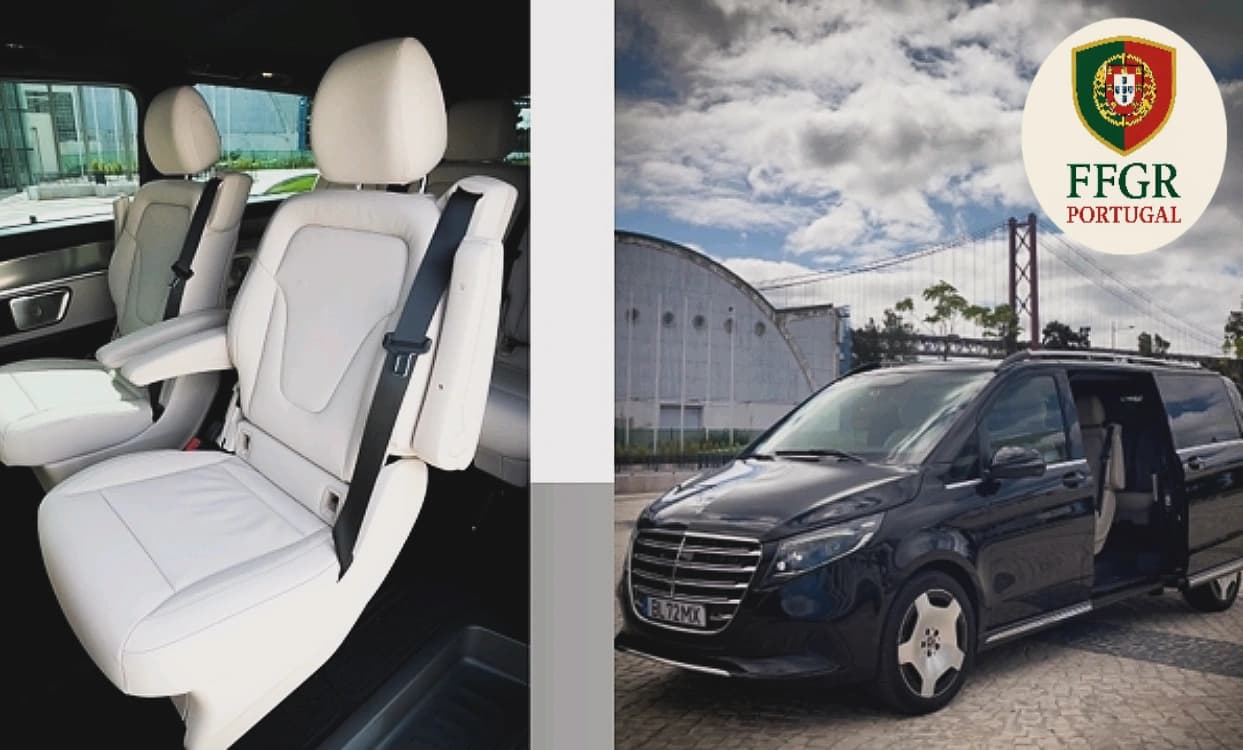
“Setúbal & Arrábida Private Tour | Chauffeur to Portugal's Most Beautiful Coastline”
Arrange Arrábida Private Tour