Thirty-five kilometres west of Lisbon, the Serra de Sintra rises from the Atlantic coast in a landscape that UNESCO designated a Cultural Landscape in 1995, a justification that understates what actually confronts the visitor: palaces of hallucinatory colour perched on granite peaks above a forest of ancient oaks and tree ferns, gardens that descend through hidden grottos to wells of symbolic depth, and at the western edge of the promontory, the Cape Roca cliffs that mark the westernmost point of continental Europe. To approach Sintra by private chauffeur is to recover the experience that the nineteenth-century Romantics sought when they retreated here from Lisbon, an immersion in beauty without interruption, at a pace entirely one's own.
Departure from Lisbon and Arrival in Sintra
The drive from Lisbon to Sintra follows the A37 motorway through the Sintra-Cascais Natural Park perimeter, a journey of approximately forty minutes from the city centre without the waits that the commuter train requires. Your chauffeur selects the approach road and first destination based on your stated priorities: the town centre and National Palace for those beginning with history, or the upper palaces for those who prefer altitude before descent.
Early morning departure, before nine o'clock, provides access to the Pena Palace and Moorish Castle in the quiet hour before the coaches arrive. This timing, which requires a Lisbon hotel departure before eight-thirty, transforms the experience entirely: the same colonnades and ramparts that feel crowded at midday become a private discovery in the morning mist.
Pena Palace: Romanticism at Its Apex
The Palácio da Pena, commissioned by King Ferdinand II in the 1840s and completed in a riot of Moorish arches, Gothic turrets, Manueline windows, and Baroque columns painted in ochre and crimson, stands at 529 metres above sea level and constitutes perhaps the most theatrical royal residence in Europe. Your chauffeur deposits you at the upper car park, reserved for private vehicles, which eliminates the steep climb from the lower entrance.
The palace interior, the formal gardens, and the surrounding park of exotic trees covering some two hundred hectares reward between ninety minutes and three hours depending on the depth of engagement. Your chauffeur waits in the upper car park and is available immediately when you return, with no fixed departure time imposed.
Quinta da Regaleira: Initiation and Mystery
The Quinta da Regaleira, built at the turn of the twentieth century for the eccentric millionaire António Augusto Carvalho Monteiro, is a property of extraordinary symbolic density: a neo-Gothic palace, a chapel, and a garden penetrated by underground tunnels, grottos, lakes, and the famous Initiation Well, a spiral staircase descending nine levels into the earth, constructed according to Masonic and Knights Templar symbolism.
The property requires at minimum ninety minutes of unhurried exploration, and the underground passages are navigable only with the property's map. Your chauffeur waits at the main gate: the property's location in the town centre makes this the natural collection point, and the timing of your emergence from the tunnels is, deliberately, unpredictable.
Lunch in Sintra Village
The historic centre of Sintra, clustered around the National Palace with its twin conical chimneys, contains a number of restaurants serving the local specialities: travesseiro pastries from Piriquita, regional cheeses, and wine from the Colares appellation, one of Portugal's smallest and most unusual denominations, grown on ungrafted vines in sandy soil at the cliff's edge.
Your chauffeur can recommend restaurants from personal experience and, for parties requiring a reservation, can coordinate with the establishment before your arrival. The lunch pause is built into the day's itinerary rather than treated as an interruption: an hour and a half in the village centre between morning palace visits and afternoon coastal exploration.
Cape Roca: The Edge of the Continent
The Cabo da Roca lighthouse, standing above sheer Atlantic cliffs at 140 metres elevation, marks the westernmost point of the European mainland: a geographical fact that Luís de Camões described as "where the land ends and the sea begins." The drive from Sintra takes twenty minutes through the natural park, with the Atlantic wind making itself felt as the vehicle descends toward the cape.
The cape is not a place for hurrying: the horizon extends three hundred and sixty degrees around the headland, the waves breaking on the rocks far below are audible above the wind, and the lighthouse building itself houses a small exhibition. Most visitors spend thirty to forty-five minutes at the cape before returning, but the timing is entirely at your discretion.
Return via Cascais or Direct to Lisbon
The return journey from Cape Roca offers two natural routes: the coastal road through Cascais, Portugal's most fashionable Atlantic resort town, offering a late afternoon promenade along the bay, the casino gardens, and the historic centre, before rejoining the A5 motorway to Lisbon; or the direct return through the natural park for guests who prefer to conclude the day quietly.
A Cascais stopover of forty-five minutes to an hour adds texture to the return without lengthening the day significantly. The Cascais Marina, the Boca do Inferno rock formation, and the Dom Carlos I gardens are all within comfortable walking distance of the central car park where your chauffeur waits.
Continue reading
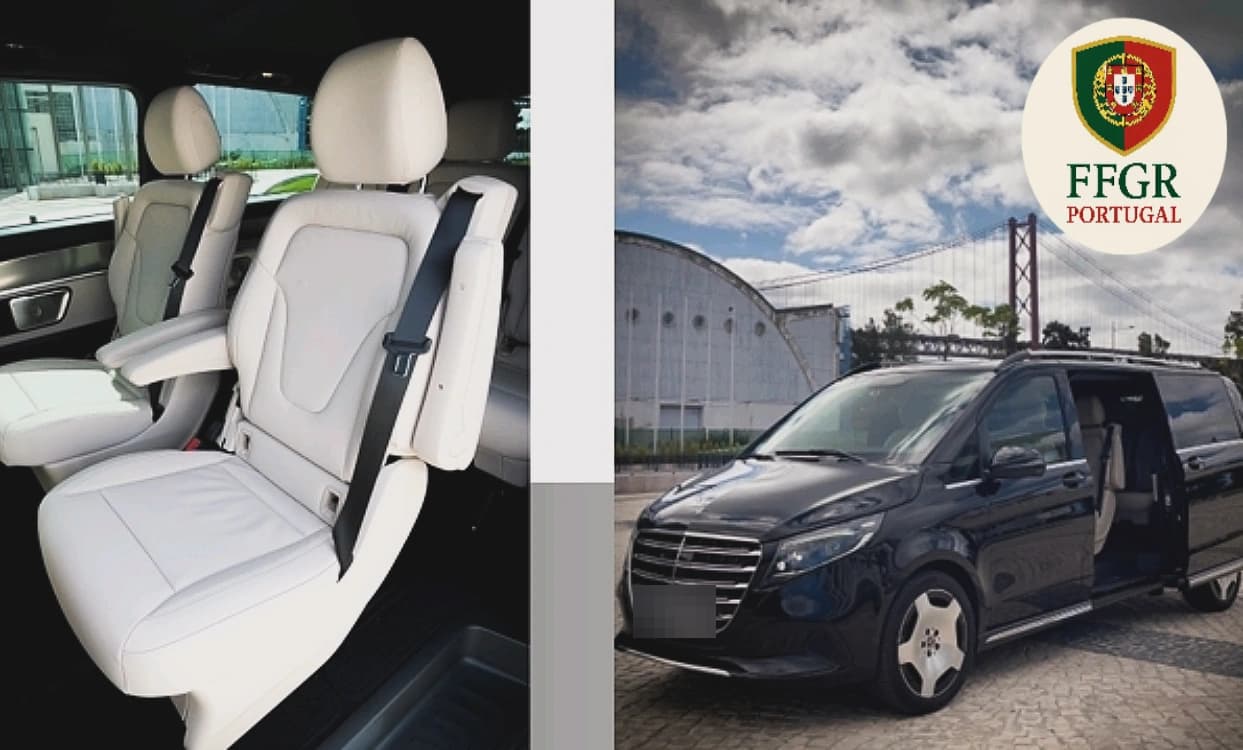
“Sintra by Private Chauffeur: Pena Palace, Quinta da Regaleira & Cape Roca”